 Save
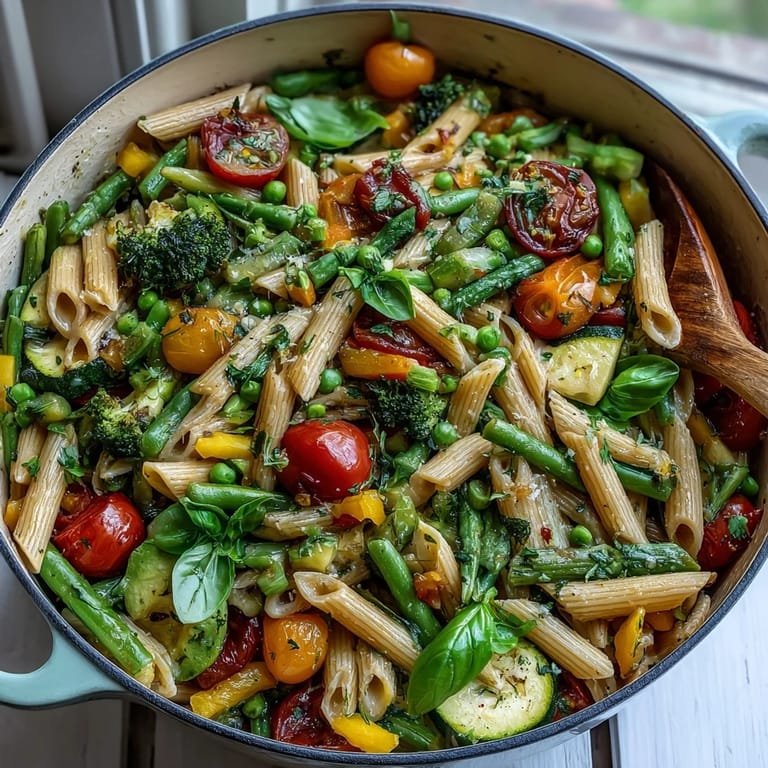
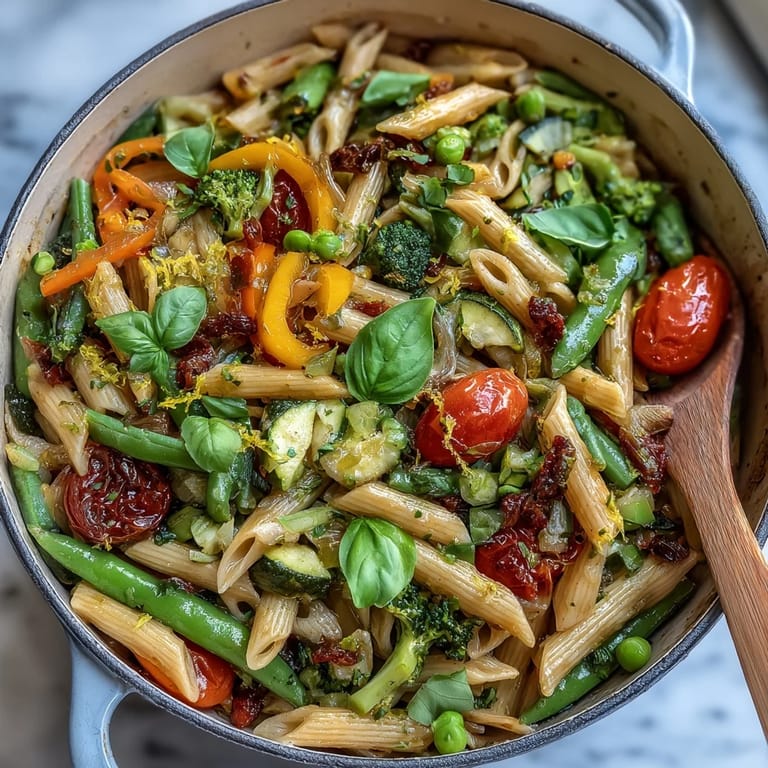
Save One Tuesday evening, my kitchen filled with the most unexpected aroma—I'd thrown together whatever vegetables were lingering in my crisper drawer with dried pasta and vegetable broth, and somehow it became something magical. The lemon hit first, bright and cutting through the richness of olive oil, while basil leaves released their perfume as I stirred them in at the end. My partner walked in mid-cook and asked what smelled so alive, and I realized I'd accidentally discovered my new favorite weeknight dinner. This one-pot pasta primavera feels less like cooking and more like orchestrating flavors in the time it takes to brew a pot of tea.
I made this for my sister's surprise dinner last spring when she went vegan, and she actually teared up at the table—not because it was sad, but because she realized plant-based food could taste this vibrant and intentional. That moment taught me that food becomes memorable not just from technique but from how it makes someone feel seen. Now whenever someone mentions struggling with vegan cooking, I immediately think of that night and know exactly what to recommend.
Ingredients
- 340 g dried penne or fusilli: Use pasta that's explicitly marked vegan—some brands add egg, and you want that clean, tender texture without any compromise.
- 1 small red onion, thinly sliced: The thin slices cook down into the broth and create natural sweetness that balances the acidity from lemon.
- 2 cloves garlic, minced: Mince it finely so it disperses throughout the pot rather than leaving chunks—you want the flavor woven in, not concentrated.
- 1 small red bell pepper and 1 small yellow bell pepper, sliced: The combination gives you color and slight flavor variation; red is sweeter, yellow is milder.
- 1 medium zucchini, sliced into half-moons: Half-moons cook more evenly than rounds and look intentional on the plate.
- 1 cup cherry tomatoes, halved: Halving them lets the heat burst their centers slightly, releasing juice that becomes part of the sauce.
- 1 cup snap peas or green beans, trimmed: Either works beautifully; snap peas stay snappier, while green beans become softer—choose based on your texture preference.
- 1 cup broccoli florets: Small florets integrate better than large ones and cook through in the time the pasta needs.
- 900 ml vegetable broth: Low-sodium broth is essential because the flavors will concentrate as liquid reduces—you control the salt level, not the broth maker.
- 2 tbsp extra-virgin olive oil: This is your fat base and carries flavor, so don't skimp on quality here.
- 1 tsp sea salt and ½ tsp black pepper: Season gradually as you go—the broth and nutritional yeast (if using) will add their own saltiness.
- Pinch of red pepper flakes: Optional but recommended; they add a subtle heat that makes people say things like "something's different, what is it?"
- Zest and juice of 1 lemon: The zest goes in with the juice for double brightness—one is sharp, one is aromatic, together they're unstoppable.
- ½ cup fresh basil leaves, torn: Tear them by hand rather than chopping; it releases oils more gently and looks less bruised on the finished dish.
- 2 tbsp nutritional yeast: Optional but transforms the dish into something creamy-tasting without any dairy—it adds umami and a subtle cheesy note.
Tired of Takeout? 🥡
Get 10 meals you can make faster than delivery arrives. Seriously.
One email. No spam. Unsubscribe anytime.
Instructions
- Heat your foundation:
- Pour olive oil into a large pot over medium heat and let it warm until it shimmers slightly. Add your sliced red onion and minced garlic, stirring often until the onion turns translucent and the garlic smells unmistakably fragrant—usually two to three minutes.
- Build with color:
- Add all your sliced bell peppers, zucchini, cherry tomatoes, snap peas, and broccoli florets to the pot. Sauté for three to four minutes, stirring occasionally, until the edges of the vegetables start to soften and the whole pot begins smelling like something intentional.
- Introduce the pasta:
- Pour in your dried pasta directly into the pot without pre-cooking it, then add the vegetable broth, sea salt, black pepper, and a tiny pinch of red pepper flakes if you're feeling bold. Stir everything together until the pasta is mostly submerged and the broth is evenly distributed.
- The gentle simmer:
- Raise the heat to bring everything to a boil—you'll see it bubbling more actively—then immediately lower it to a gentle simmer. Leave it uncovered and stir often, maybe every minute or so, for ten to twelve minutes until the pasta tastes al dente and the broth has mostly absorbed into the pasta and vegetables.
- Finish with brightness:
- Turn off the heat and stir in your lemon zest, fresh lemon juice, torn basil leaves, and nutritional yeast if using. Taste it and adjust salt and pepper—this is your moment to make it exactly what you want.
- Serve and celebrate:
- Divide into bowls while everything's still warm, optionally garnish with extra basil leaves and a drizzle of really good olive oil, then eat it immediately while the basil is still fragrant.
 Save
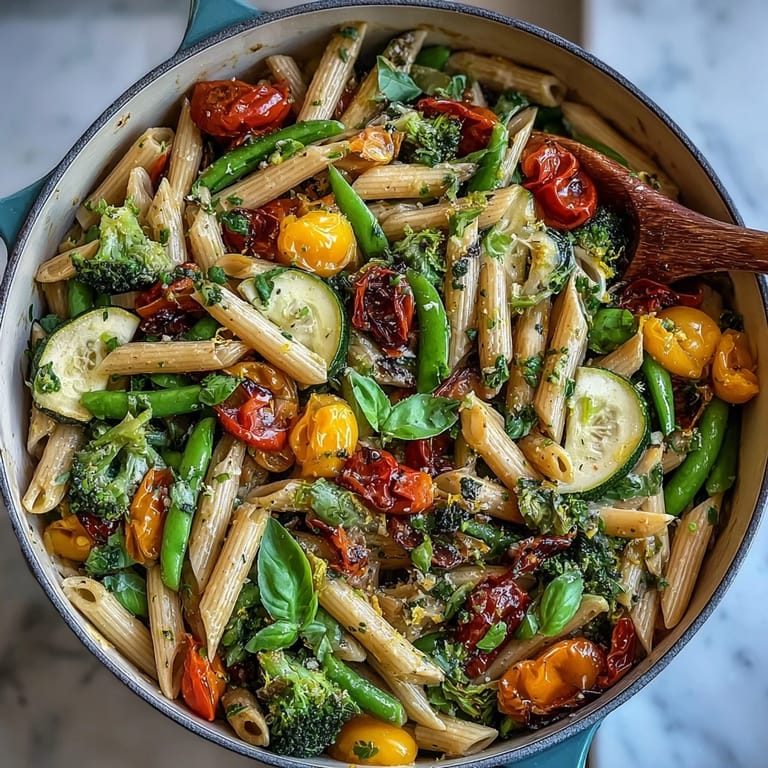
Save There's a moment near the end of cooking when the pot stops smelling like individual ingredients and starts smelling like dinner, and that's when I know everything's about to come together. It's subtle—the basil hasn't even gone in yet—but it's the kitchen telling you that you're almost there, and I never take that moment for granted.
Why One-Pot Cooking Changes Everything
One-pot meals aren't just about fewer dishes to wash, though that's genuinely lovely. There's something about cooking everything in the same vessel that makes the flavors actually listen to each other instead of developing separately. The pasta absorbs the vegetable-infused broth, the vegetables soak up the olive oil and garlic, and by the time you finish, there's this seamless integration that feels more intentional than throwing components together on a plate.
Seasonal Flexibility
This recipe is genuinely forgiving with vegetables—I've made it in summer with fresh peas and asparagus, in autumn with roasted sweet potato cubes, and even in winter with kale that I massaged with a tiny bit of olive oil before tossing it in near the end. The formula stays the same: about four cups of vegetables in varying stages of density, enough broth to cook your pasta, and seasoning that lets everything taste like itself. The joy is that you're never making the same dish twice because you're always working with what your farmers market or garden offers.
The Small Details That Matter Most
I learned the hard way that the difference between this dish being memorable and it being forgettable often comes down to three small choices: using good olive oil because you're not cooking it into oblivion and it stays present, tearing basil by hand because bruised basil smells like disappointment, and zesting the lemon before juicing it because you need both forms of that brightness. These aren't complicated techniques, but they're the difference between dinner and something you remember.
- Taste and adjust at the very end—sometimes the broth is saltier than expected, sometimes the lemon needs to be more aggressive, and that final moment of control is yours alone.
- Don't skip the nutritional yeast if you have it—it genuinely adds a savory depth that makes people ask if there's cheese hiding in there.
- Serve this immediately while the basil is still fragrant and the pasta is at its peak temperature—it's one of those dishes that's best enjoyed right now, not reheated tomorrow.
 Save
Save This dish has become my answer to almost every cooking question because it proves that simple, quality ingredients cooked with attention taste infinitely better than complicated techniques masking mediocre components. Make it tonight and taste the difference.
Recipe Help & FAQs
- → What vegetables work best in this dish?
Bell peppers, zucchini, cherry tomatoes, snap peas, and broccoli create a colorful mix. Feel free to substitute based on seasonality—asparagus, green beans, or spinach work beautifully too.
- → Can I make this gluten-free?
Absolutely. Simply swap regular penne or fusilli for your favorite gluten-free pasta. Cooking times may vary slightly, so check for doneness a minute or two earlier.
- → How long do leftovers keep?
Store in an airtight container in the refrigerator for up to 3 days. The pasta will continue absorbing liquid, so add a splash of water or broth when reheating.
- → What can I use instead of nutritional yeast?
Nutritional yeast adds subtle cheesy notes. If you don't have any, try vegan parmesan, a sprinkle of hemp seeds, or simply omit— it's delicious without any substitute.
- → Can I add protein to this dish?
White beans, chickpeas, or lentils make excellent additions. Stir them in during the last 5 minutes of cooking. For a protein boost, serve alongside tofu or your favorite plant-based protein.
- → Why cook pasta directly in the broth?
Cooking pasta in vegetable broth allows it to absorb flavor while releasing starch into the liquid, creating a naturally silky sauce that coats every piece. It's a traditional Italian technique that maximizes taste.