 Save
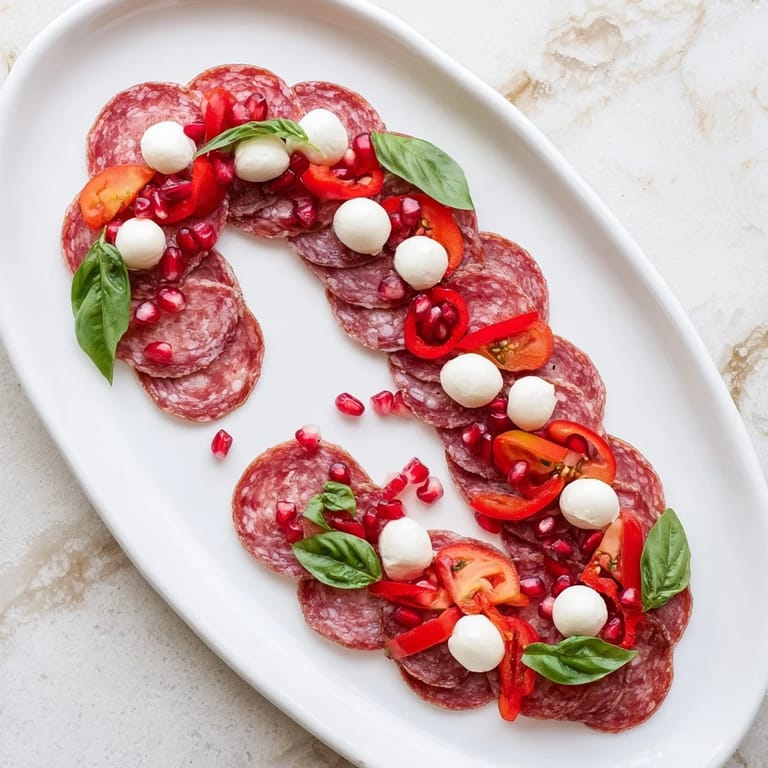
Save I'll never forget the December afternoon when my sister challenged me to create something "nobody's ever seen before" for our holiday potluck. I was standing in my kitchen, staring at a board full of salami, fresh mozzarella, and red peppers, when it hit me—why not arrange everything in the shape of a candy cane? The bold red and white stripes would be pure festive magic. That board became legendary at our gathering, and now every holiday season, someone asks me to bring "that candy cane thing" again.
I still remember watching my eight-year-old nephew's face light up when he realized the board was shaped like a candy cane. He immediately started pointing out the "stripes" to every person who walked by, turning that appetizer into a shared experience rather than just food. That moment taught me that the best recipes aren't just about flavor—they're about creating memories.
Ingredients
- Mozzarella cheese (200 g, sliced or small balls): The creamy white base of your candy cane pattern. Fresh mozzarella or bocconcini work beautifully because they hold their shape and create those clean white stripes. If you can find buffalo mozzarella, it has a richer flavor that makes people pause mid-bite.
- Goat cheese (100 g, optional, sliced or crumbled): This adds a tangy edge that surprised me the first time I included it—it cuts through the richness of the other cheeses and makes every bite more interesting.
- Dry-cured salami (200 g, sliced): The bold red star of your candy cane. I learned to buy slices that are thin enough to overlap beautifully but thick enough to hold their own flavor. The paprika and spices in quality salami are what make people reach for just one more piece.
- Prosciutto (100 g, optional, rolled): These delicate, salty rolls add elegance and a sophisticated touch. Roll them loosely so they don't get crushed—they're more about the presentation than the heaviness.
- Cherry tomatoes (100 g, halved): The surprise jewels of this board. Their brightness adds freshness that nobody expects on a charcuterie spread, and they balance all that rich cheese and cured meat.
- Red bell pepper (1, sliced into strips): These add crunch and complement the tomatoes perfectly. I always slice them fresh just before serving because they stay crisp and vibrant.
- Pomegranate seeds (50 g, for garnish): This is the ingredient that makes people ask "how did you think of this?" They add pops of color and a tart burst that refreshes your palate between bites of cheese and cured meat.
- Grapes (100 g, green or red): I prefer a mix because it adds visual interest. They're also the perfect little palate cleanser, and kids always go for them first, which means the vegetables get eaten too.
- Fresh basil or rosemary sprigs: These aren't just decoration—they're edible holiday mood. Brush your hand across them as you reach for cheese and the aroma fills the whole board with that festive kitchen magic.
- Assorted crackers (150 g): Use a mix of textures and colors. Some thin and delicate, some hearty. This is where guests get creative about building their perfect bite.
- Baguette (1 small, sliced, optional): I add this for texture variety and to give people another vehicle for the dips. Toasted slices hold up better to the moisture from cheese and toppings.
- Whole-grain mustard or honey (1 small bowl): The mustard's sharp edge pairs surprisingly well with sweet elements, while honey mellows everything out. I learned to put out both and let people discover their preference.
- Cranberry chutney or fig jam (1 small bowl): This is the ingredient that elevates the whole board from "nice cheese plate" to "where did you find this?" The sweetness plays off the salty cured meats in the most unexpected way.
Tired of Takeout? 🥡
Get 10 meals you can make faster than delivery arrives. Seriously.
One email. No spam. Unsubscribe anytime.
Instructions
- Start with your base curve:
- Lay out your large board and imagine a candy cane shape—an S-curve that starts in one corner. Begin placing slices of salami and mozzarella in an alternating pattern, overlapping them slightly like shingles on a roof. This is where the magic starts. You're creating bold red and white stripes that will make people immediately recognize the candy cane shape. Don't worry about perfection here—slight irregular overlaps actually look more artisanal and intentional.
- Build out the curves:
- Continue your S-curve pattern, moving from one side of the board toward the center, then curving back out toward the opposite corner. As you work, step back occasionally and squint at the board—this helps you see if your candy cane shape is reading clearly. If it feels too thin in places, add more overlapping slices. You want people to see the pattern from across the room.
- Fill in with secondary colors:
- Now tuck in pieces of goat cheese and rolled prosciutto into the curves and spaces you've created. This is where the board starts feeling abundant and generous. The goat cheese adds creaminess and the prosciutto adds elegant rolls of color variation. Don't be shy—this should look like a celebration of abundance.
- Add the festive accents:
- Place your halved cherry tomatoes and red bell pepper strips strategically around the board, particularly along the red sections of your candy cane to deepen that color. The bell pepper strips add crispy freshness, and their natural sweetness is a revelation next to the salty meats. As you place them, think about creating little flavor combinations—a tomato near some salami, a pepper strip near the goat cheese.
- Scatter the jewels:
- Sprinkle pomegranate seeds across the board like edible confetti. Add clusters of grapes—I like to group them by color for visual interest. These little fruits are where guests' eyes will land, and they add that unexpected pop of tartness that makes people feel like they're eating something special.
- Arrange the crackers and bread:
- Place your assorted crackers around the perimeter of the board or in a separate basket nearby. If you're using baguette slices, arrange them in a casual overlapping fan. Leave enough space so guests can easily reach for them without disturbing your carefully arranged cheese and meats. These are the vehicles that make every bite feel intentional.
- Position your dips:
- Set small bowls of mustard and chutney on the board or just at its edge. I learned to do this last because it's easy to nudge the bowls around as you're arranging everything else. The bowls should look like an invitation—visible, accessible, and tempting.
- Finish with the final touch:
- Tuck fresh basil or rosemary sprigs into gaps around the board, particularly near the white cheese sections for contrast. These herbs aren't just garnish—they're flavor hints and aroma. When someone reaches for cheese near a sprig of rosemary, they'll get that herbaceous whisper of holiday season. Serve immediately and watch everyone's faces as they realize what shape they're looking at.
 Save
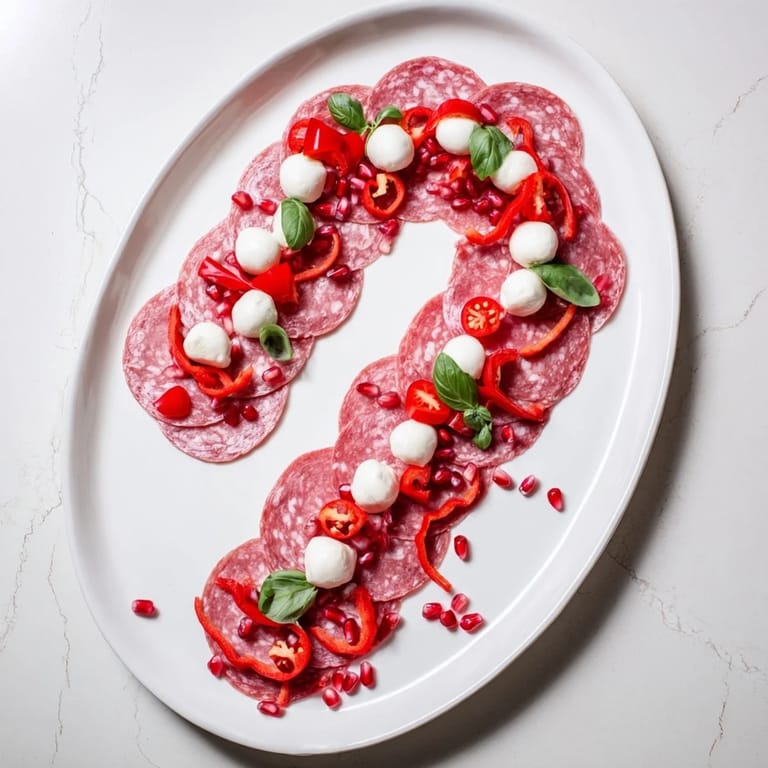
Save During our family holiday dinner last year, I watched my cousin carefully construct her own tiny candy cane on her plate, deliberately choosing which pieces would go together. That's when I realized this recipe isn't just about impressing people—it's about inviting them to participate in something joyful and creative. The board became something everyone wanted to contribute their own spin to.
The Art of the Charcuterie Board
There's something deeply satisfying about arranging food as art. With this candy cane board, you're not just feeding people, you're creating a focal point that people will photograph, talk about, and remember. I've learned that the most impressive boards aren't about having rare or expensive ingredients—they're about understanding color, contrast, and rhythm. The way red and white create visual tension, the way creamy cheese needs something crunchy nearby, the way a single sprig of herb can tie everything together. This is modern food styling that anyone can master in their home kitchen.
Seasonal Variations and Swaps
One of my favorite things about this recipe is how endlessly adaptable it is. For a vegetarian version, I skip the cured meats entirely and double down on cheeses, adding roasted red peppers and marinated artichokes for sophistication. You could swap the mozzarella for white cheddar if you prefer something sharper, or try Havarti for something creamier. The pomegranate seeds are special because they're seasonal and festive, but during other times of year, I've used tart cranberries, dried apricots, or even pomegranate arils mixed with pomegranate juice-soaked cranberries for extra tartness. The beauty is that the candy cane shape and arrangement style work with whatever fresh, quality ingredients you have access to.
Serving and Pairing Magic
This board truly shines when paired thoughtfully with drinks. I always serve it alongside a crisp white wine—something like Pinot Grigio or Sauvignon Blanc that cuts through the richness of the cheese and cured meats. Sparkling beverages work beautifully too, adding an extra festive element. The bubbles seem to dance across your palate between bites of salty salami and creamy mozzarella. For non-alcoholic options, I've had tremendous success with sparkling apple cider or cranberry spritzers. The tartness of these beverages echoes the pomegranate seeds and tomatoes on the board, creating a unified experience rather than random elements. One last helpful thought: arrange this board within 30 minutes of serving. Arrange it much earlier and the mozzarella can begin to release moisture, which affects presentation. Arrange it too close to serving time and your guests arrive to an incomplete experience. That middle ground is where the magic happens. And always remember that people eat with their eyes first—the candy cane shape is doing half the work before anyone takes a single bite.
- Keep backup ingredients nearby so you can refresh sections that get depleted during the party
- Use small decorative picks or toothpicks to help guests navigate delicate items like rolled prosciutto
- The mustard and chutney are flavor game-changers—don't skip them or swap them for store-bought versions without tasting first
 Save
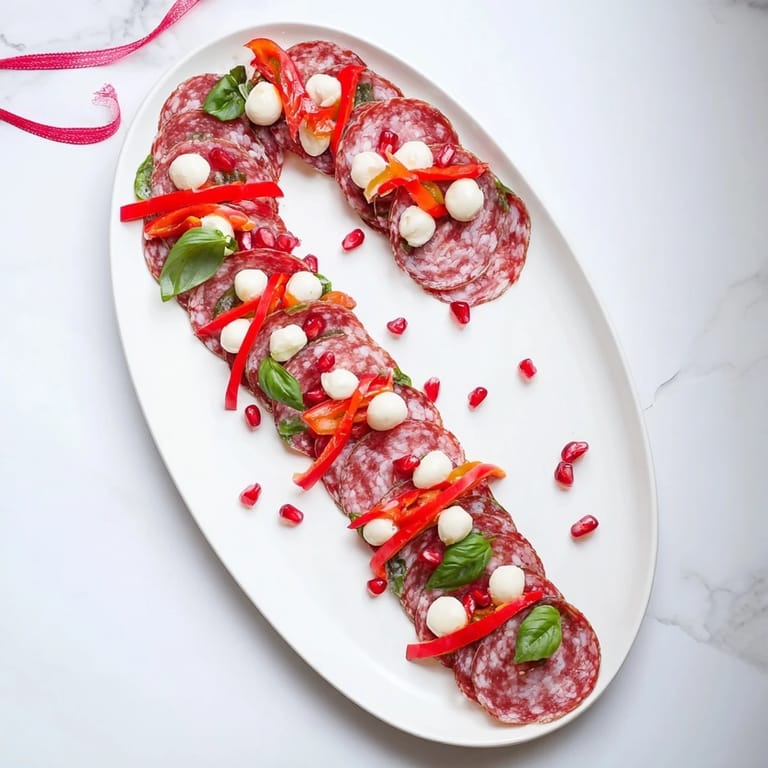
Save This candy cane board has become my signature holiday move—not because it's complicated, but because it brings people together in the most delightful way. Every time I make it, someone tells me it's the most beautiful appetizer they've ever seen, and I love that a simple idea executed with intention can become something memorable.
Recipe Help & FAQs
- → How do I create the candy cane zigzag effect?
Arrange mozzarella and salami slices alternately in an overlapping S-shape on your serving board, starting from one corner and curving toward the center before sweeping out again.
- → Can I make this board vegetarian-friendly?
Yes, omit the meats and add additional cheeses, roasted peppers, and marinated artichokes to maintain a balanced array of flavors and textures.
- → What cheeses work best for this presentation?
Mozzarella balls or slices are ideal, with optional goat cheese for creaminess; white cheddar or Havarti are great alternatives.
- → How should I garnish the board for a festive look?
Use fresh herbs like basil or rosemary sprigs and scatter pomegranate seeds on the board for vibrant red and green accents.
- → What dips complement the board’s flavors?
Whole-grain mustard or honey and cranberry chutney or fig jam pair well, adding sweet, tangy, and spicy notes to the charcuterie elements.
- → Are there gluten-free options included?
Yes, using gluten-free crackers ensures the board suits gluten-sensitive guests while keeping the overall appeal.