 Save
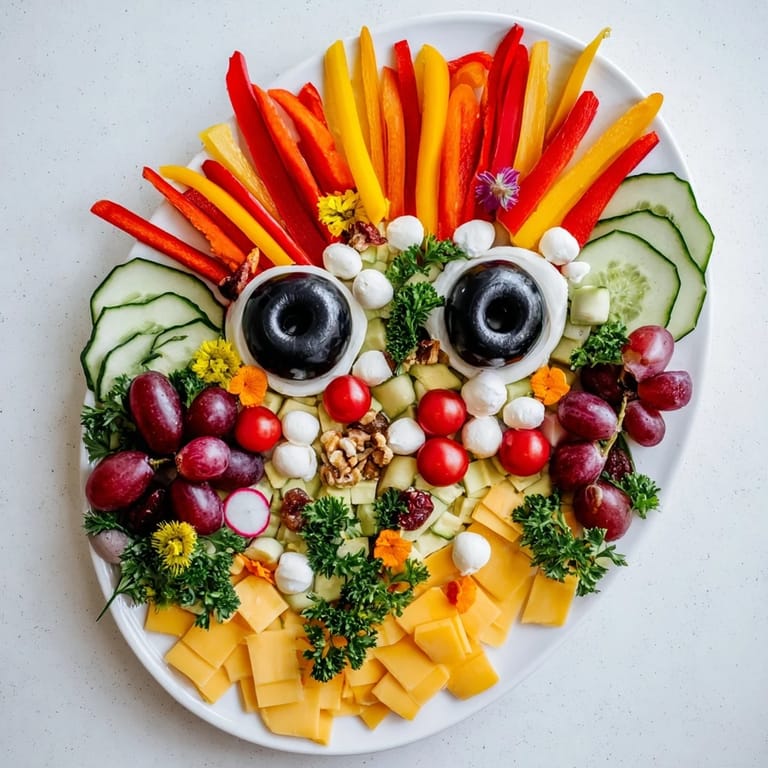
Save I'll never forget the year I decided to transform a boring appetizer spread into something that would make guests gasp when they walked in. I was hosting a New Year's Eve party, standing in my kitchen at midnight-minus-two-hours, when inspiration struck: what if I arranged everything like a masquerade mask? The symmetry, the drama, the instant conversation starter. My hands moved almost on their own, fanning out colorful peppers and cucumber slices like feathers, and suddenly our simple veggie platter became the star of the evening.
I watched my friend Sarah's face light up when she arrived at that New Year's party and saw the mask staring back at her from our dining table. She walked straight to it, phone in hand, and spent five minutes getting the perfect shot. By the time everyone had gathered, it became this beautiful focal point where people naturally congregated, talking and laughing as they picked through the colors. That's when I understood: the best recipes aren't just about taste—they're about creating moments.
Ingredients
- 2 large green or black olives, pitted (or 2 small cubes of firm cheese such as cheddar or gouda): These become your mask's mysterious eyes—I learned the hard way that pitting them yourself matters, because the pre-pitted ones sometimes lose their shape when you need them most for positioning
- 1 cup cucumber slices, thinly sliced: The cucumber's cool crunch and pale green color create the perfect base layer; slice them just before serving so they stay crisp and refreshing
- 1 cup colorful bell pepper strips (red, yellow, orange): These are your platter's jewels—the colors are why this works so beautifully, so don't skip the variety
- 1/2 cup cherry tomatoes, halved: Their sweetness cuts through the savory elements; halving them helps them nestle into your design without rolling away
- 1/2 cup red radish slices: These add a peppery snap and gorgeous color contrast—honestly, they're the ingredient people always underestimate until they taste one
- 1/2 cup baby carrots, halved lengthwise: Halving them lengthwise keeps them from stealing the show but still adds that sweet earthiness
- 1/2 cup seedless grapes (red or green): They add pockets of sweetness and catch the light beautifully in the arrangement
- 1 cup assorted cheeses, cubed (cheddar, gouda, Swiss): The cheese fills gaps with creaminess and richness; cutting them into similar-sized cubes helps everything look intentional
- 1/2 cup mini mozzarella balls: These little spheres are a game-changer for filling awkward spaces while adding a creamy element
- 1/2 cup nuts (walnuts, almonds, or pistachios): They add crunch and earthiness; I usually toast them lightly even though it's not required, because it makes them taste more intentional
- 1/4 cup dried fruits (apricots, cranberries, or figs): The chewiness and subtle tartness round out all the fresh flavors
- 1/2 cup crackers or breadsticks (optional): These are optional, but they add structure for guests who want to build bites and give the platter a complete feeling
- Fresh herbs (parsley, basil, dill): The green garnish ties everything together visually and adds a bright, fresh note—don't skip this step, it's what elevates it from platter to artwork
Tired of Takeout? 🥡
Get 10 meals you can make faster than delivery arrives. Seriously.
One email. No spam. Unsubscribe anytime.
Instructions
- Start with your canvas:
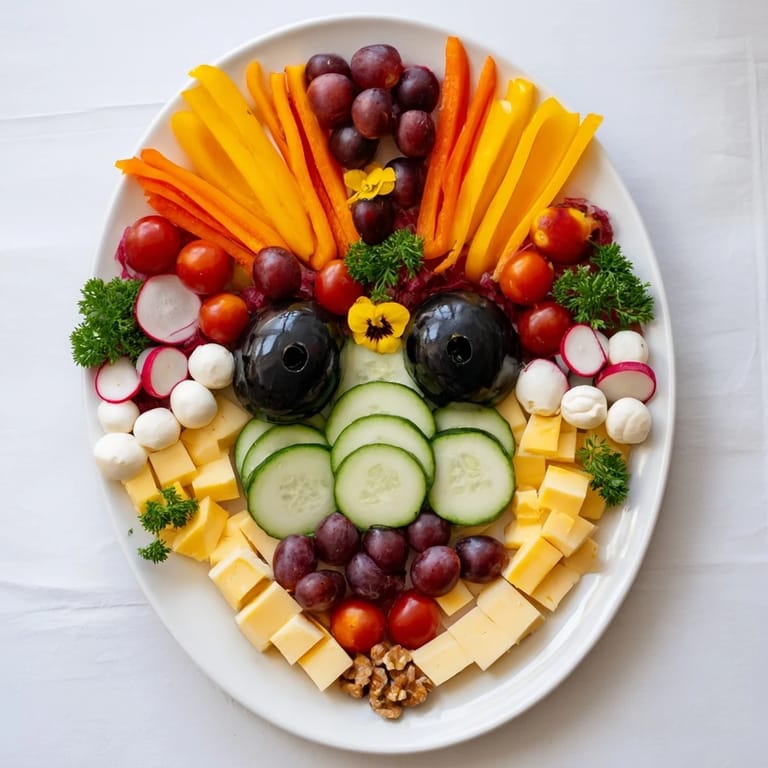
- Choose a large oval or rectangular serving board—this is your foundation for the whole mask shape. The size matters more than you'd think; I learned to use at least 18 inches across so everything has breathing room and the design reads clearly from across the room.
- Create the mask's eyes:
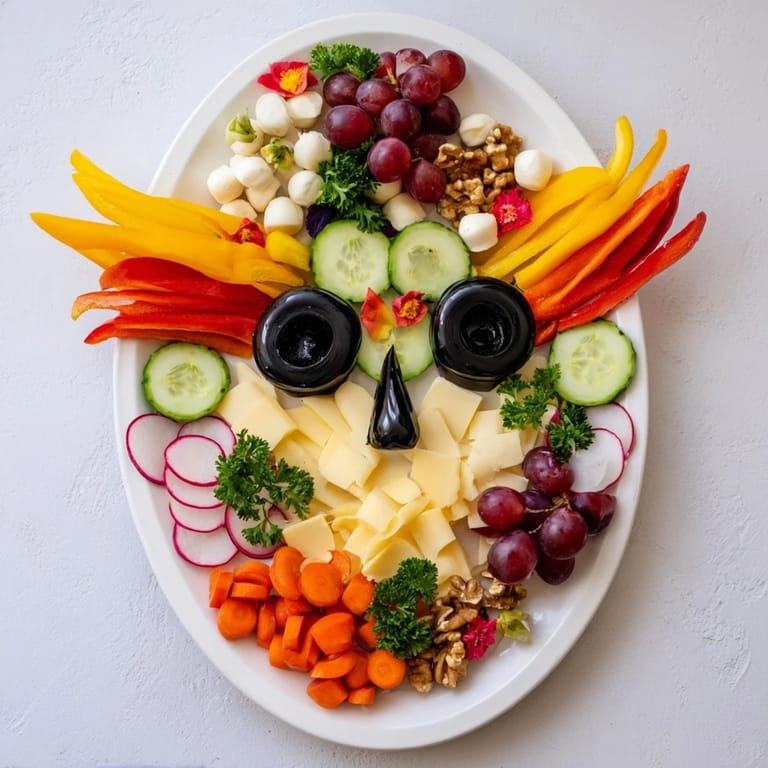
- Position your two olives or cheese cubes near the center top of the board, spaced apart horizontally about 4-5 inches apart. These are the focal point, so take a moment to position them thoughtfully—they're what makes people recognize the mask immediately.
- Fan out the feathered edges:
- This is the magic part: starting above and around your eyes, arrange the vegetable slices and bell pepper strips in wide, symmetrical arcs, like feathers spreading outward. Work slowly, rotating your platter as you go so you maintain balance. I find it helpful to arrange one side completely, then mirror it on the other side—it feels more like creating actual symmetry.
- Nestle in the supporting players:
- Tuck cheese cubes and mozzarella balls among the vegetables and fruits, filling gaps thoughtfully. Don't overcrowd; leave some breathing room so colors stay distinct and people can actually pick pieces without an avalanche.
- Fill strategic gaps:
- Scatter nuts and dried fruits in the empty spaces, creating little pockets of texture and color. Think of this like painting with ingredients—each element should enhance the ones around it.
- Add the finishing frame:
- If using crackers or breadsticks, arrange them at the lower edge or sides of the board like a decorative frame, creating a border that completes the mask shape.
- Crown it with freshness:
- Just before serving, scatter fresh herbs and edible flowers across the entire platter. This final garnish transforms it from assembled platter into something that looks professionally crafted.
- Present immediately:
- Bring it straight to the table while everything is at peak freshness. The moment people see it is pure joy.
 Save
Save What struck me most about that New Year's Eve party wasn't just that people ate more vegetables than usual—it was that the platter became a conversation piece, a moment of connection before the actual celebration began. My grandmother leaned over and told me it reminded her of the Venetian masks she'd seen years ago, and suddenly we were sharing travel stories while eating radishes. That's the unexpected gift of this recipe: it makes people linger a little longer over something simple.
The Power of Presentation
I've learned that the same ingredients arranged haphazardly on a plate and thoughtfully composed on a masquerade mask register completely differently in people's minds. It's not about fancy cooking techniques—it's about the care you put into the visual composition. When you take 20 minutes to arrange food with intention, you're essentially saying to your guests: I thought about you when I made this. That emotional element matters more than you might expect. The mask shape itself becomes a metaphor for celebration, for mystery, for stepping into something special. That's what makes this recipe work beyond just the flavors.
Seasonal Adaptations
One of my favorite things about this platter is how it changes with the seasons while maintaining its magic. In summer, I lean into heirloom tomatoes and fresh berries. In fall, I add roasted beets and dried figs. Winter brings out the jewel tones with red cabbage ribbons and pomegranate seeds. Spring is all about tender asparagus tips and fresh peas. The structure stays the same, but the ingredients keep it feeling current and seasonal. You're never stuck with the same version twice.
Making It Work for Every Guest
I've created this platter for vegetarians, vegans, gluten-free friends, and everything in between. For vegan guests, I skip the cheese and use marinated tofu cubes or roasted chickpeas instead—they add the same textural contrast. For those who want something more substantial, I tuck cooked shrimp, smoked salmon, or prosciutto into the design. The beauty is that the mask structure works regardless of what fills it, so you can customize without losing the impact. I usually keep a small bowl of hummus or herbed cream cheese on the side for dipping, which gives people more options without cluttering the main event.
- Always check ingredient labels for allergens, especially with nuts and cheeses—your guests' safety matters more than sticking exactly to the recipe
- If someone mentions a dietary restriction, embrace it as a creative challenge rather than a compromise; some of my best adaptations came from "Can this work without dairy?"
- Keep extra components prepped and hidden nearby so you can refresh the platter if it sits out for a while
 Save
Save Every time I make this mask, I remember that moment when my guests' faces lit up, and it reminds me why I love cooking: it's about creating experiences, not just feeding people. This platter does that beautifully.
Recipe Help & FAQs
- → How do I create the mask’s eye openings?
Use two large olives or small cheese cubes placed horizontally near the top center of the serving board to mimic eye openings.
- → Can I make this platter vegan?
Yes, omit the cheeses and replace them with marinated tofu cubes or additional fruits and vegetables.
- → What ingredients add texture to the platter?
Nuts such as walnuts or almonds, dried fruits, and crackers add crunch and contrast to the soft cheeses and vegetables.
- → How should I arrange the vegetables and fruits?
Fan sliced cucumbers, bell pepper strips, and other fruits and veggies in symmetrical arcs around the 'eyes' to create a feathered mask effect.
- → What garnishes enhance the visual appeal?
Fresh herbs like parsley, basil, and dill, along with edible flowers, add color and a festive touch.
- → Are there allergy considerations?
This platter contains dairy and nuts; omit or substitute crackers for gluten-free options and check ingredient labels for allergies.